The Hidden Superpower of Non‑Technical Founders
Why non‑technical founders can win: focus on the problem, story, customer, and distribution. Case studies (Airbnb, Bumble, Canva, Byju’s) and a 14‑day MVP path you can run without writing code.
The Hidden Superpower of Non‑Technical Founders
Introduction: Breaking the Myth
Scroll through startup Twitter, LinkedIn posts, or investor panels and you’ll hear the same line over and over again: “If you can’t code, you can’t build a startup.”
This myth has been repeated so many times that countless potential founders - especially those with ideas and customer insight - never even start. They assume they need a Computer Science degree or a technical co‑founder before they can take their first step.
But here’s the truth: the startup graveyard is filled with products that had flawless code but no real customers. The winners, on the other hand, often came from founders who didn’t write a single line of code.
In fact, being a non‑technical founder can be your greatest advantage. You’re forced to focus on the right things: the problem, the story, the customer, and the business model.
Today, let’s unpack why this is true, look at case studies of billion‑dollar companies built by non‑technical founders, and see how you can use your “lack of code” as a competitive edge.
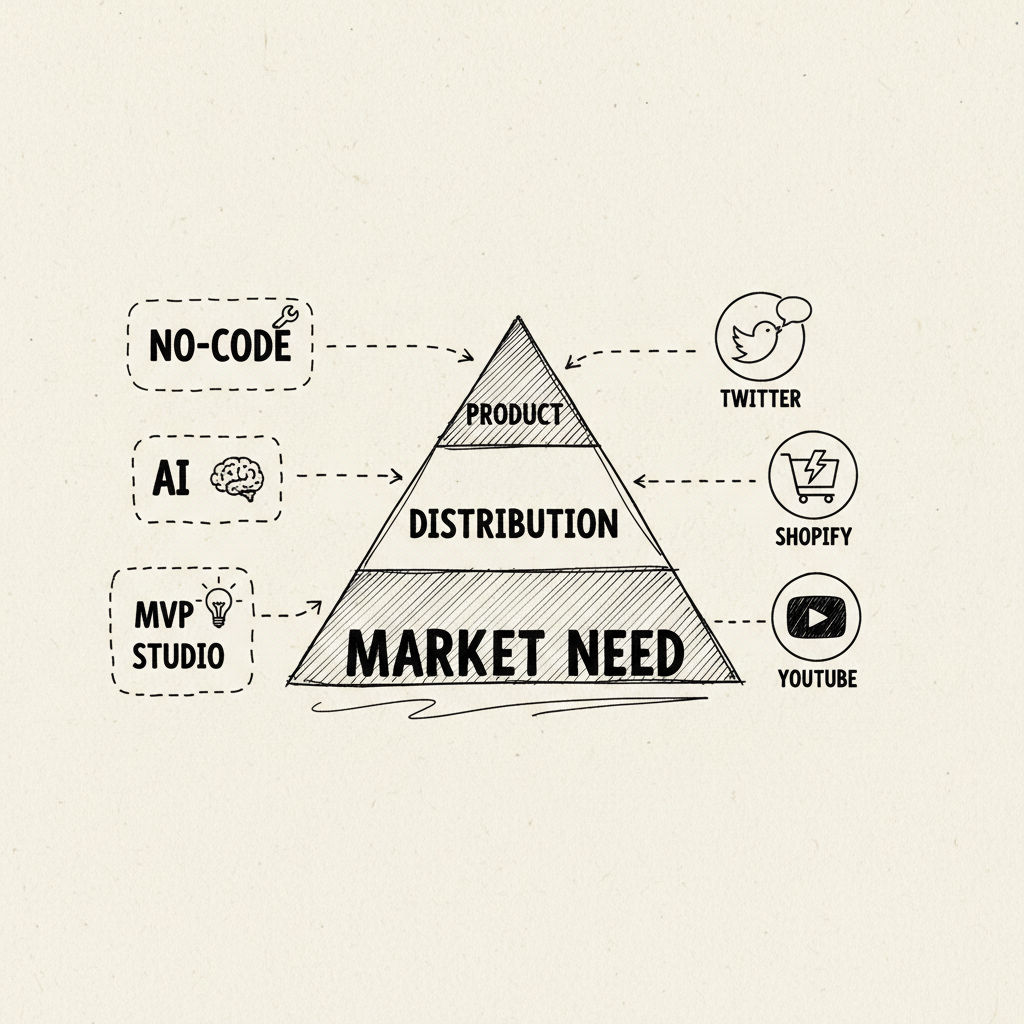
Myths That Hold Non‑Technical Founders Back
1) “Without coding skills, you’ll always be dependent.”
Yes, you’ll need someone to build the product. But that’s no different than every other founder who needs someone else - lawyers, accountants, designers, marketers. No one builds everything alone. The job of the founder is to find resources and make them work.
2) “Investors won’t take you seriously.”
Look at the cap tables of Airbnb, Bumble, Canva, or even Byju’s. Investors poured in money because they believed in the vision and traction, not because the founder could debug a server. Execution matters, but so does storytelling, leadership, and market insight.
3) “Tech is the hardest part.”
Wrong. Technology is an enabler. The hardest part of building a company is distribution, trust, and customer obsession. Writing code is a craft, but building a business is an orchestra.
The Real Edge of Non‑Technical Founders
Customer Obsession
Engineers often fall in love with the product. Non‑technical founders fall in love with the customer. You don’t spend nights debating frameworks - you spend them talking to users, understanding pain points, and testing offers.
Storytelling & Branding
Whitney Wolfe Herd (Bumble) didn’t win because of an algorithm. She won because of brand, positioning, and a clear story: a dating app where women make the first move. Non‑technical founders often come from sales, design, or communication backgrounds - skills that make stories spread.
Focus on Distribution
Canva wasn’t the first online design tool. But Melanie Perkins obsessed over onboarding teachers and students, not features. The edge isn’t in how fast you render a PDF - it’s in how fast you get into classrooms, offices, or communities.
Hiring the Right People
Non‑technical founders don’t assume they know it all. They’re forced to bring in experts, delegate, and build processes earlier. That often results in stronger leadership teams.
Case Studies: Billion‑Dollar Startups by Non‑Technical Founders
Airbnb (Brian Chesky & Joe Gebbia)
- Background: Designers, not coders.
- Struggle: Needed rent money → turned apartments into “Air Bed & Breakfast.”
- What worked: Obsession with customer experience (photos, trust, hospitality).
- Takeaway: Their edge wasn’t tech - it was design and community.
Bumble (Whitney Wolfe Herd)
- Background: Marketing & branding, not engineering.
- Struggle: Entered a crowded dating market dominated by Tinder.
- What worked: Storytelling (“women make the first move”), relentless brand focus, smart partnerships.
- Takeaway: She wasn’t building an app - she was building a movement.
Canva (Melanie Perkins)
- Background: Design & communication.
- Struggle: Raised rejection after rejection; no coding skills.
- What worked: Pitched vision, built partnerships, found technical co‑founders later.
- Takeaway: The story and clarity of vision opened investor doors.
Byju’s (Byju Raveendran)
- Background: Teacher, not engineer.
- Struggle: Started with offline teaching, then expanded online.
- What worked: Deep understanding of education market, relentless sales, charisma.
- Takeaway: His value was distribution, not code.
Why This Matters in 2025
The tools landscape has changed:
- No‑code platforms (Bubble, Webflow, Glide)
- AI coding assistants (Cursor, GitHub Copilot)
- Fast MVP studios (like mine)
Non‑technical founders no longer face a 12‑month lag or massive budgets to validate. You can ship a production‑grade MVP in 14 days, test with customers, and pivot. Execution speed + founder clarity is the unfair advantage.
How I Help Close the Gap
I run a boutique MVP studio that builds production‑ready MVPs in 14 days.
Here’s how we work with non‑technical founders:
- Scope together: clarify the “must‑have” 2–3 features that test your idea.
- Build fast: design + code + deploy in 2 weeks.
- Document & handoff: clean code, clear docs, so you can hire a team later.
You don’t need to learn React, manage a dev team, or wait months. You need to validate quickly before competitors catch on.
Conclusion: Your Superpower is Clarity
If you’re a non‑technical founder, stop waiting.
You’re already strong at what truly matters: customers, stories, distribution.
Tech is the easy part - especially today.
Pair your vision with execution speed, and you’re unstoppable.
So no, you don’t need to code to build a startup. You need clarity, customers, and courage. The rest can be outsourced, delegated, or partnered on.
Building an MVP? Week One Labs ships custom-coded SaaS and mobile MVPs in fixed-price 14-day sprints. Book a free scope call to get a plan for your build.